
Make an appointment
When it comes to your health, you deserve quality service. You can rely on our team for your medical examinations. To make an appointment, contact our team by phone, fax or click the “Make an appointment” link.
819 820-2827
Fax: 819 563-3542
Platelet-Rich Plasma Infiltration (PRP)
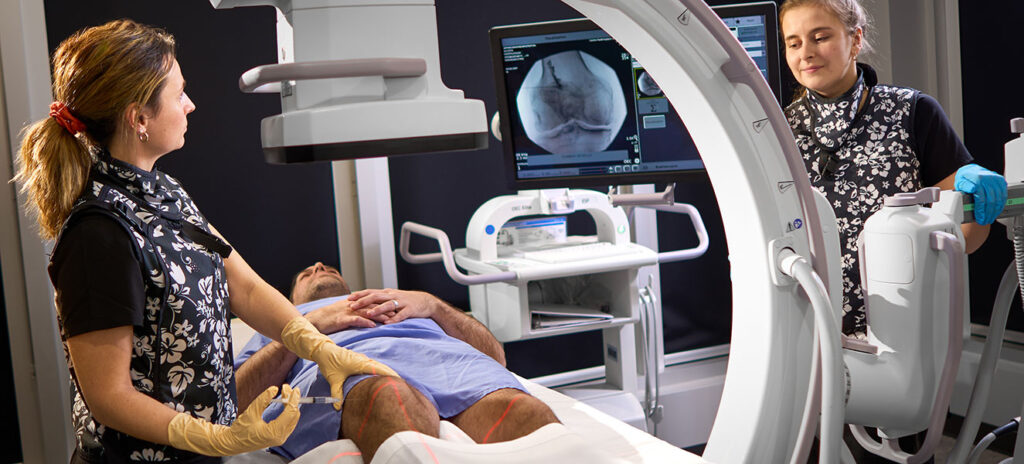
Plastelet-rich plasma infiltration (PRP) is an interventional procedure in which PRP, derived from the patient’s own blood, is injected into a musculoskeletal structure to accelerate healing by supplying growth factors. The procedure is designed to reduce pain.
Why choose platelet-rich plasma injections?
PRP is a natural, minimally invasive treatment option that offers several advantages:
- Promotes healing of injuries such as tendonitis, ligament or muscle damage.
- Relieves chronic pain associated with osteoarthritis or joint inflammation.
- Stimulates tissue regeneration, particularly of damaged cartilage, muscles and tendons.
PRP infiltration is indicated for a variety of medical conditions. It is suitable for:
- Patients suffering from chronic pain due to conditions such as osteoarthritis or tendonitis.
- Athletes wishing to recover quickly from injuries.
- People seeking a non-surgical approach to treat joint degeneration or ligament damage.
PRP injections can be administered in several parts of the body:
- Shoulder
- Knee
- Hip
- Ankle
- Spine
Each case is unique, and medical advice is necessary to determine whether this treatment is right for you.
Preparation for the test
To maximize the benefits of PRP, follow these recommendations before your appointment:
Avoid anti-inflammatories: These medications can reduce platelet efficiency.
Stay well hydrated: Good hydration improves the quality of the plasma obtained.
Report your medications: Inform us of any current treatment, especially anticoagulants or supplements.
Rest the area being treated: If you’re treating an injury, avoid strenuous activity before the injection.
Our team will provide you with specific instructions for your situation.
At the time of your appointment, please make sure you have:
- your valid health insurance card
- the original medical prescription signed by the requesting professional
The PRP Injection Procedure
The procedure is simple and involves just a few steps:
Blood sample: A small quantity of blood is taken, usually from a vein in your arm.
Centrifugation: The blood is placed in a centrifuge to separate platelet-rich plasma from other blood components.
Targeted injection: The resulting PRP is injected directly into the area to be treated, such as a joint or tendon, under X-ray guidance for optimum precision.
The whole process takes around 30 to 60 minutes, and you can resume your daily activities shortly afterwards, depending on the site treated.
Precautions and contraindications
Although PRP is generally safe, certain precautions must be taken:
Anticoagulants: These drugs may affect the efficacy and safety of treatment. Inform your doctor or our staff if you are taking this type of medication.
Serious medical conditions: Patients with cancer, active infections, or significant blood disorders may not be eligible.
Pregnancy and breastfeeding: As a precaution, PRP is usually not recommended for pregnant or breastfeeding women.
Allergies or intolerances: Even if PRP is derived from your own blood, certain allergies to the local anesthetics used during the procedure must be reported.
Fees
PRP injections are not covered by the Régie de l’assurance maladie du Québec (RAMQ). Please refer to our price list for the cost of PRP injections.
Check your insurance coverage, as many of the costs associated with PRP injections are reimbursed by private insurance, group insurance, as well as by the SAAQ and the CNESST (if the procedure is required by one of these two organizations).
FAQ
PRP infiltration is an innovative treatment, but you may have questions. Find in our FAQ all the information you need to reassure yourself and better understand this procedure.
What to do after a PRP injection?
After an injection of PRP, the goal is to maximize the natural inflammatory response, which is essential to stimulate healing. Here are some recommendations to follow:
- Observe a strict rest of the treated area for 24 to 48 hours.
- Apply ice (10 minutes every 2 hours) to reduce discomfort and swelling.
- Consume protein to promote tissue repair.
- Avoid anti-inflammatory drugs for at least 2 weeks, as they block the inflammation necessary for effective treatment.
- Avoid strenuous physical activity for about 2 weeks.
How long does the PRP effect last?
PRP injections work more slowly and its benefits develop over several weeks. The effect of PRP generally lasts between 6 and 18 months depending on the type of lesion treated and individual response. This is a long-lasting treatment that promotes long-term healing.
What are the possible complications of a PRP injection?
The possible complications of a PRP infiltration are rare and generally not serious. Since it is an autologous product, derived from your own blood, the risk of allergy or rejection is almost zero.
The most common side effects are local reactions (pain, redness, swelling or bruising) at the injection site. These symptoms are temporary and disappear within a few days. Transient inflammation or body aches may also occur within 24 to 48 hours after the procedure, particularly during joint injections.
As with any procedure involving an injection, there is a very low risk of infection to the treated skin or joint. Vascular or nerve damage is rare, but it can occur if the needle touches a blood vessel or nerve.
Are PRP infiltrations covered by the RAMQ?
No, platelet-rich plasma infiltrations are not covered by the Régie de l’assurance maladie du Québec (RAMQ). To find out the cost of injecting PRP, please refer to our fee schedule.
Several fees related to PRP infiltrations are reimbursed by private insurance, group insurance, as well as by the SAAQ and the CNESST (if the procedure is required by one of these two organizations).
Any questions?
Contact us